

AI Trading Tools: The Future Of Smarter, Automated Trading
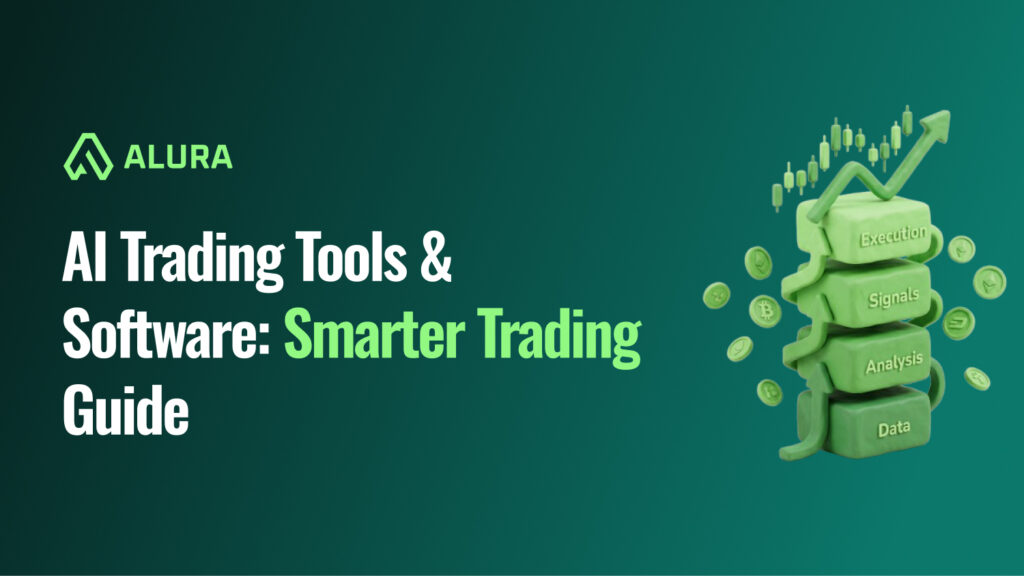
AI Trading Tools:
AI trading tools are changing the way people trade in financial markets. From stocks to cryptocurrencies, traders now rely on intelligent systems that can analyze data, identify patterns, and execute trades with speed and precision. What once required hours of research and constant monitoring can now happen in seconds through advanced automation. AI tools for stock trading and crypto trading help traders stay ahead by processing large amounts of data in real time.
In this article, you will learn how AI trading tools work, why they are getting smarter, and what traders need to understand before using them effectively.
What Do You Mean by AI Trading Tools?
AI trading tools are software systems that use artificial intelligence to analyze market data and support trading decisions. They study price movements, market trends, and historical data to identify patterns and generate trading signals. Many AI trading software solutions can also execute trades automatically based on pre-defined rules, reducing the need for constant manual monitoring.
AI trading tools are widely used in both stock and crypto markets. AI tools for stock trading help investors manage portfolios, control risk, and improve efficiency. In fast-moving crypto markets, they provide 24/7 monitoring and quick execution. In simple terms, AI trading tools help traders make more informed, data-driven decisions while saving time and effort.
What Is AI Trading Software?
AI trading software is a digital platform that uses artificial intelligence to support or fully automate trading activities in financial markets. It collects and analyzes large amounts of market data, such as price charts, trading volume, and market trends, to generate insights and trading signals. Some AI trading software can also execute trades automatically based on preset strategies, helping traders act faster and more efficiently.
Unlike traditional trading tools, AI trading software continuously learns from new data and adapts to changing market conditions. This makes it useful in both stock and crypto markets, where prices move quickly and unpredictably. Traders use this software to reduce manual effort, improve decision-making, and maintain a consistent trading strategy without emotional interference.
How AI Trading Software Works?
AI trading software works step by step to turn raw data into actionable trades. Here is how it generally functions:
- At first, the software collects large volumes of market data in real time. This includes price movements, trading volume, historical charts, and sometimes even news and sentiment data.
- After collecting data, the system processes it using artificial intelligence models. It removes noise, organizes information, and identifies meaningful patterns in market behavior.
- Based on the analysis, the software generates trading signals. These signals indicate potential buy, sell, or hold opportunities depending on the strategy being used.
- If automated trading is enabled, the AI system executes trades directly through connected exchanges or brokers. It follows predefined rules without emotional interference.
- If automated trading is enabled, the AI system executes trades directly through connected exchanges or brokers. It follows predefined rules without emotional interference.
- The software continuously monitors market conditions. Many AI trading systems also learn from past trades to improve future decisions and adapt to changing market trends.
What Makes AI Trading Tools Smarter Today?
AI trading tools are smarter today because they can process large amounts of real-time market data very quickly. They analyze price movements, trading volume, news updates, and historical patterns at the same time. This helps them detect opportunities faster and make more accurate trading decisions compared to traditional methods.
Another key factor is the integration of machine learning and advanced algorithms. Modern AI systems continuously learn from past trades, refining their strategies and improving performance over time. They can adapt to changing market conditions, making them more resilient in both stock and cryptocurrency markets. Additionally, improvements in computing power, cloud technology, and risk management models have significantly enhanced their efficiency. As a result, top AI Trading bots are now more accurate, adaptive, and capable of delivering smarter trading outcomes.
What Are The Types of AI Tools For Stock Trading And Crypto Markets?
The types of AI tools for stock trading and crypto markets are AI trading bots, algorithmic trading platforms, portfolio management AI tools, and risk management and analytics tools.
AI Trading Bots
AI trading bots are automated programs that execute trades in financial markets using predefined rules and AI-driven signals. They continuously scan market conditions, identify opportunities, and place buy or sell orders without requiring manual input from the trader. Because they can react within milliseconds, these bots are highly effective in fast-moving stock and cryptocurrency markets, where timing plays a crucial role. They use machine learning models to analyze historical price movements, detect patterns, and improve their strategies over time. As they process more data, their decision-making becomes more accurate and adaptable to changing market conditions, making AI trading robots in crypto trading especially useful for handling volatility, tracking multiple assets at once, and executing trades with speed and precision beyond human capability.
Algorithmic Trading Platforms
Algorithmic trading platforms use complex mathematical models and predefined algorithms to analyze market data and execute trades automatically. These platforms focus on precision and speed, allowing traders to implement strategies that would be difficult or impossible to manage manually. They process large datasets, including price trends, volume changes, and market indicators, to identify profitable trading opportunities. Both institutional and retail traders widely use these platforms because they offer consistency and efficiency.
Portfolio Management AI Tools
Portfolio management AI tools help traders and investors optimize their investment portfolios by analyzing performance, risk exposure, and market trends. These tools evaluate multiple assets at once and suggest adjustments to improve diversification and reduce risk. They are especially useful for long-term investors who want to maintain a balanced and efficient portfolio. By using predictive analytics, these tools help users make informed decisions about where to allocate capital for better returns while maintaining controlled risk levels.
Risk Management And Analytics Tools
Risk management and analytics tools focus on protecting traders from potential losses by monitoring market conditions and evaluating trade risks in real time. These tools analyze factors such as price volatility, leverage exposure, and market trends to identify risky positions before they lead to significant losses. They also provide actionable insights like stop-loss recommendations, risk scores, and exposure limits. In addition, advanced AI systems can detect unusual market behavior or sudden volatility spikes, alerting traders instantly.
AI Software For Stock Trading Vs Crypto Trading
The difference between AI software used in stock trading and crypto trading mainly comes down to how each market behaves.
| AI Software for Stock Trading | AI Software for Crypto Trading |
| AI software for stock trading is more regulated and structured. | AI software for crypto trading is highly volatile and less regulated. |
| They are Long-term, stable, risk-controlled strategies | They are Long-term, stable, risk-controlled strategies |
| They have a moderate speed, which is usually enough. | They have a very high-speed execution, which is critical. |
| They emphasize capital preservation. | They have emphasized quick risk adjustment. |
What Are The Risks And Limitations Of Ai Trading Tools?
The risks and limitations of AI trading tools are overfitting and model risk, market unpredictability, dependence on data quality, and technical and security risks.
Overfitting And Model Risk
Overfitting happens when an AI trading model is too closely trained on past market data. It may show strong results during testing, but fail when applied to real-time markets. This is because financial markets are always changing, and patterns from the past do not always repeat. As a result, the model may generate inaccurate signals and lead to poor trading decisions. Traders need to regularly update and test their models to reduce this risk.
Market Unpredictability
Financial markets are influenced by many unpredictable factors such as global events, economic changes, and sudden news. Even the most advanced AI trading software cannot fully predict these unexpected movements. This can lead to sudden losses, especially in highly volatile markets like crypto. AI tools can improve decision-making, but they cannot eliminate uncertainty in trading.
Dependence On Data Quality
AI trading tools rely entirely on the data they receive. If the data is incorrect, outdated, or incomplete, the system will produce unreliable results. Poor data quality can lead to wrong trading signals and inefficient strategies. For accurate performance, traders must ensure that the AI system uses clean, real-time, and reliable data sources.
Technical And Security Risks
AI trading tools depend on strong technical infrastructure and secure systems. Issues such as server downtime, software bugs, or internet failures can interrupt trading operations. Additionally, cyber threats like hacking and data breaches can put funds and sensitive information at risk. Although AI co-Pilots are transforming trading bots into smart partners, users must still ensure proper security measures, system monitoring, and risk management practices are in place.
Conclusion
AI trading tools are changing the way trading works in both stock and crypto markets. They allow traders to analyze large amounts of data, identify patterns, and execute trades with speed and precision. By removing emotional decision-making and enabling continuous market monitoring, these tools help create more disciplined and consistent trading strategies. At the same time, it is important to understand that AI trading software is not perfect. Market uncertainty, data quality, and technical risks still exist, so traders must use these tools with proper planning and risk control.
Alura shows how advanced trading is becoming with the integration of autonomous and deterministic systems. It provides a structured approach to interacting with perpetual markets, allowing users to automate strategies and maintain continuous market exposure. As AI trading tools continue to evolve, platforms like Alura.fun will play an important role in building a more efficient, transparent, and reliable trading ecosystem for traders, developers, and liquidity providers.
Frequently Asked Questions
Is AI Trading Software Safe To Use?
Yes, AI trading software can be safe if you use trusted and secure platforms. However, no system is completely risk-free. Technical issues, market volatility, and data problems can still affect performance, so careful monitoring is important.
How Much Capital Is Needed To Use Ai Trading Tools?
The amount of capital required depends on the platform, the type of market, and the trading strategy being used. Some AI trading tools allow users to start with a small amount of capital, making them accessible to beginners. However, larger capital can provide more flexibility, better risk management, and improved results in certain strategies.
Can AI Trading Tools Reduce Trading Risks?
AI trading tools can help reduce risks by using data-driven analysis, automated execution, and predefined risk management rules. They can set stop-loss levels, monitor market conditions in real time, and avoid emotional decisions.